Grouped bar chart comparing average percent change in offshore versus onshore headcount from 2019 to 2024, split by remote suitability. For high remote-suitability roles, offshore headcount grew 48.73% versus 34.18% onshore — a 15 percentage point gap. For low remote-suitability roles, offshore grew 28.6% versus 28.93% onshore, roughly equal.
The race to save costs is pushing skilled jobs abroad
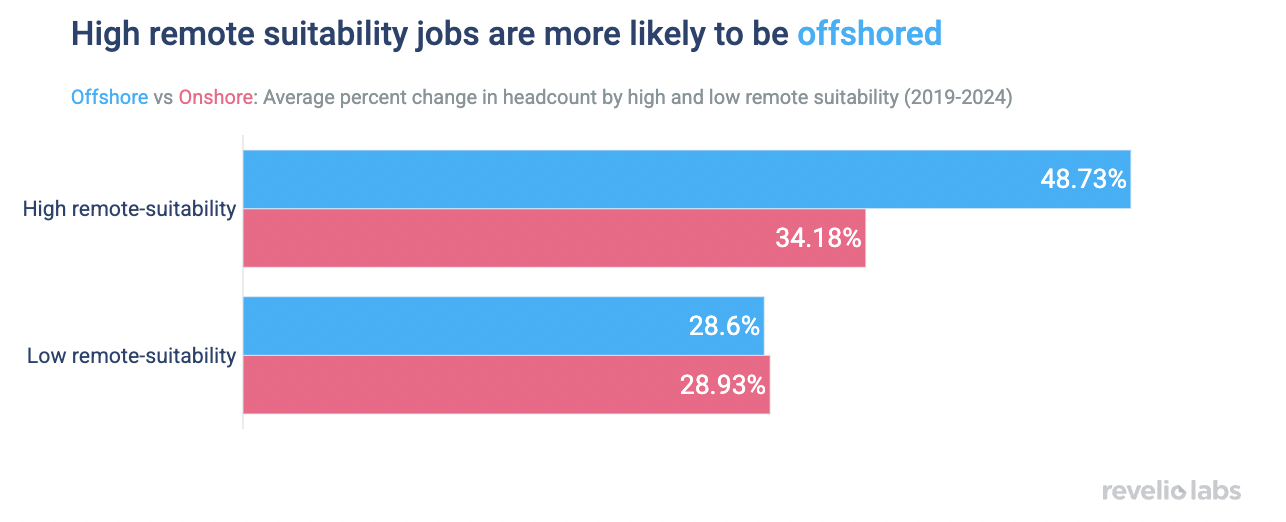
Figure 3.Grouped bar chart comparing average percent change in offshore versus onshore headcount from 2019 to 2024, split by remote suitability. For high remote-suitability roles, offshore headcount grew 48.73% versus 34.18% onshore — a 15 percentage point gap. For low remote-suitability roles, offshore grew 28.6% versus 28.93% onshore, roughly equal. Source: Revelio Labs, February 2025
title="Grouped bar chart comparing average percent change in offshore versus onshore headcount from 2019 to 2024, split by remote suitability. For high remote-suitability roles, offshore headcount grew 48.73% versus 34.18% onshore — a 15 percentage point gap. For low remote-suitability roles, offshore grew 28.6% versus 28.93% onshore, roughly equal."